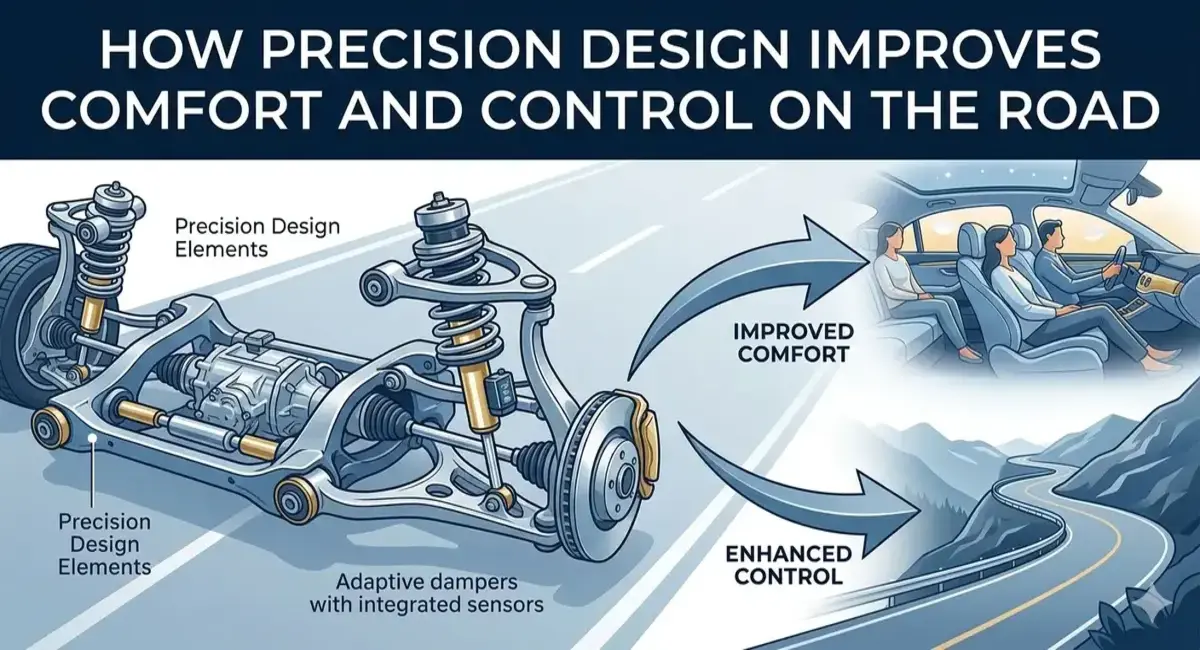
When we drive, we often take the smoothness of the ride for granted. We assume that a modern vehicle will naturally handle well and keep us comfortable. However, this seamless experience is actually the result of rigorous engineering and manufacturing standards.
Every component of a vehicle interacts with the road surface to determine how the car behaves. From the suspension geometry to the aerodynamics, every detail matters. Yet, one of the most critical factors often overlooked is precision tyre design.
For drivers in the UAE, where road conditions range from expansive highways to busy city streets, this precision is vital. It is what separates a tiring, stressful commute from a relaxing journey. Understanding how engineering accuracy impacts your drive can help you make better vehicle and maintenance choices.
What Precision Design Means in Modern Vehicle Components
Precision design refers to the exactness with which vehicle parts are engineered and manufactured. It involves reducing tolerances to microscopic levels to ensure components fit and work together perfectly. In the automotive world, there is no room for “close enough.”
This level of accuracy ensures that rotating masses, such as wheels and driveshafts, spin without vibration. It guarantees that suspension arms move in a predictable arc. Without this precision, a vehicle would feel loose, noisy, and unstable.
From Design Accuracy to On Road Performance
The journey from a digital blueprint to the open road is complex. Engineers use advanced simulation software to predict how a car will behave under various loads. This ensures that when you turn the steering wheel, the response is immediate and linear.
If components are not manufactured with high precision, the handling becomes vague. You might find yourself constantly correcting the steering on a straight road. Precision eliminates this play, resulting in a car that tracks true and feels planted.
Why Small Design Details Make a Big Difference
It is often the smallest details that have the biggest impact on driving dynamics. A slight imbalance in a wheel assembly can cause shaking at highway speeds. A minor deviation in suspension alignment can lead to rapid tyre wear.
Precision engineering focuses on these minute details to optimize performance. It ensures that weight is distributed evenly and that forces are managed correctly. This attention to detail results in a vehicle that feels cohesive and solid.
How Precision Design Enhances Driving Comfort
Driving comfort is not just about soft seats or effective air conditioning. It is fundamentally about how the vehicle isolates the driver from road imperfections. A precisely engineered vehicle filters out harshness while still providing necessary feedback.
For daily commuters in Dubai and Sharjah, this isolation is essential for reducing fatigue. A smooth ride lowers physical stress levels and makes traffic jams more bearable. It transforms the cabin into a sanctuary from the outside environment.
Reducing Noise, Vibration, and Harshness
Engineers spend countless hours working to minimize Noise, Vibration, and Harshness (NVH). Precision in the drivetrain reduces engine vibration before it reaches the chassis. Accurate aerodynamic styling reduces wind noise at highway speeds.
Tyres play a massive role in this equation. A tyre that is perfectly round and uniform will roll silently. Precision tyre design minimizes the harmonic resonance that creates road drone, leading to a quieter and more peaceful cabin.
Maintaining Consistent Road Contact
Comfort is also closely linked to stability. If a car is bouncing over bumps, the passengers will feel uncomfortable. Precision suspension tuning ensures that the wheels stay on the ground.
This consistent contact allows the suspension to do its job of absorbing impact. It prevents the jarring shocks that occur when a suspension system bottoms out. The result is a ride that feels fluid and composed, regardless of the road surface.
The Role of Precision Engineering in Vehicle Control
While comfort is important, safety depends on control. Precision engineering ensures that the vehicle reacts exactly as the driver intends. This predictability is crucial during emergency manoeuvres or poor driving conditions.
When a driver applies the brakes or turns the wheel, there should be no delay. The mechanical systems must translate these inputs into action instantly. This responsiveness gives the driver the confidence to handle complex traffic situations.
How Design Precision Improves Steering Feedback
Steering feedback tells the driver what the front wheels are doing. It communicates grip levels and road texture. A precise steering system filters out the “noise” while transmitting essential information.
This allows the driver to sense if the car is about to slide. It enables precise placement of the vehicle in a lane. On the busy highways of the UAE, this precision helps prevent accidents during lane changes.
Better Control During Acceleration and Braking
Acceleration and braking involve massive transfers of weight. Precision engineering manages this weight transfer to keep the vehicle balanced. It prevents excessive nose-diving during braking or squatting during acceleration.
This balance ensures that all four tyres maintain optimal grip. It maximizes braking efficiency and acceleration traction. For the driver, it means the car feels stable and under control at all times.
Tyre Design as a Key Element of Comfort and Control
Tyres are the final link in the chain of command from driver to road. They are complex composites of rubber, steel, and fabric. The precision with which these materials are assembled dictates the performance of the tyre.
Advanced manufacturing techniques allow for tread patterns that are intricate and effective. They ensure that the internal belts are perfectly aligned. This structural integrity is the foundation of tyre performance.
How Tread Patterns Influence Stability
The tread pattern is responsible for gripping the road and channeling water away. Precise groove angles and block shapes are calculated to maximize contact. This ensures stability during cornering and straight-line driving.
Leading manufacturers, such as Yokohama Tyres, utilize advanced computer simulations to perfect these tread patterns and internal structures for optimal balance. This level of engineering ensures that the tyre performs consistently across different speeds and surfaces. It provides the grip needed for safety and the smoothness required for comfort.
Material Precision and Its Impact on Ride Quality
The rubber compound itself is a product of precise chemical engineering. The mix of polymers and silica determines the tyre’s hardness and grip. A consistent compound ensures that the tyre wears evenly and performs predictably.
This material precision affects how the tyre absorbs small road irregularities. A well-engineered compound provides a compliant ride without sacrificing handling stiffness. It is a delicate balance that defines high-quality tyres.
Why Precision Design Matters More in UAE Driving Conditions
The driving environment in the United Arab Emirates is unique. High ambient temperatures and road surface heat place immense stress on vehicle components. The infrastructure supports high speeds, which requires absolute stability.
In this context, precision is not a luxury but a necessity. Components must be able to expand and contract with heat without losing their tolerances. They must withstand the abrasive nature of sand and dust.
Managing Heat and Road Stress in Daily Driving
Heat is the enemy of mechanical consistency. It causes fluids to thin and metals to expand. Precision engineering accounts for these thermal variances.
Tyres are particularly vulnerable to heat buildup. Precision tyre design includes heat dissipation features that prevent structural failure. This ensures safety on long summer drives between emirates.
Adapting to City and Highway Driving in Dubai and Sharjah
Drivers here often switch between stop-start city traffic and fast highways. The vehicle must be adaptable to both scenarios. Precision tuning allows for agility in the city and stability on the highway.
In Sharjah traffic, smooth low-speed control is vital. On Dubai highways, aerodynamic stability is key. A precisely engineered vehicle handles this transition seamlessly.
Long Term Benefits of Precision Focused Vehicle Design
investing in vehicles and components that prioritize precision pays off over time. While they may have a higher initial cost, they offer superior durability. Precision reduces the wear and tear that leads to premature failure.
For the owner, this means lower maintenance costs and higher resale value. It means a vehicle that feels tight and new for longer.
Improved Component Lifespan
When parts fit together perfectly, friction is minimized. This reduces the rate of wear on bearings, gears, and pistons. Engines last longer, and transmissions shift smoother for more kilometres.
Tyres that are perfectly round and balanced wear evenly. This extends their usable life and maintains performance levels. Precision effectively slows down the aging process of the vehicle.
Sustained Comfort and Control Over Time
A car that starts out comfortable should stay comfortable. Precision engineering ensures that suspension bushings and mounts do not degrade quickly. The ride quality remains consistent year after year.
This long-term reliability builds trust between the driver and the vehicle. It ensures that the safety and control features are always available when needed. It makes the ownership experience rewarding and stress-free.
Conclusion
The quality of your daily drive is directly linked to the quality of your vehicle’s engineering. Precision tyre design and accurate mechanical assembly create a driving experience that is safe, comfortable, and controlled. It turns a machine into a responsive partner on the road.
For drivers in the UAE, prioritizing precision means choosing vehicles and components that can handle the local environment. It means valuing engineering substance over superficial features. This approach leads to safer roads and more satisfied drivers.
Next time you drive, pay attention to the feedback from your car. Appreciate the smooth idle, the silent cruising, and the precise steering. These are the tangible benefits of precision design working for you.
FAQ Section
Does precision design really affect driving comfort?
Yes, accurate design improves stability and smoothness.
Is comfort linked to better vehicle control?
Yes, better control reduces fatigue and improves safety.
Do UAE roads require higher design precision?
Yes, heat and road conditions increase performance demands.
Can design quality impact long term driving confidence?
Yes, consistent performance builds trust over time.