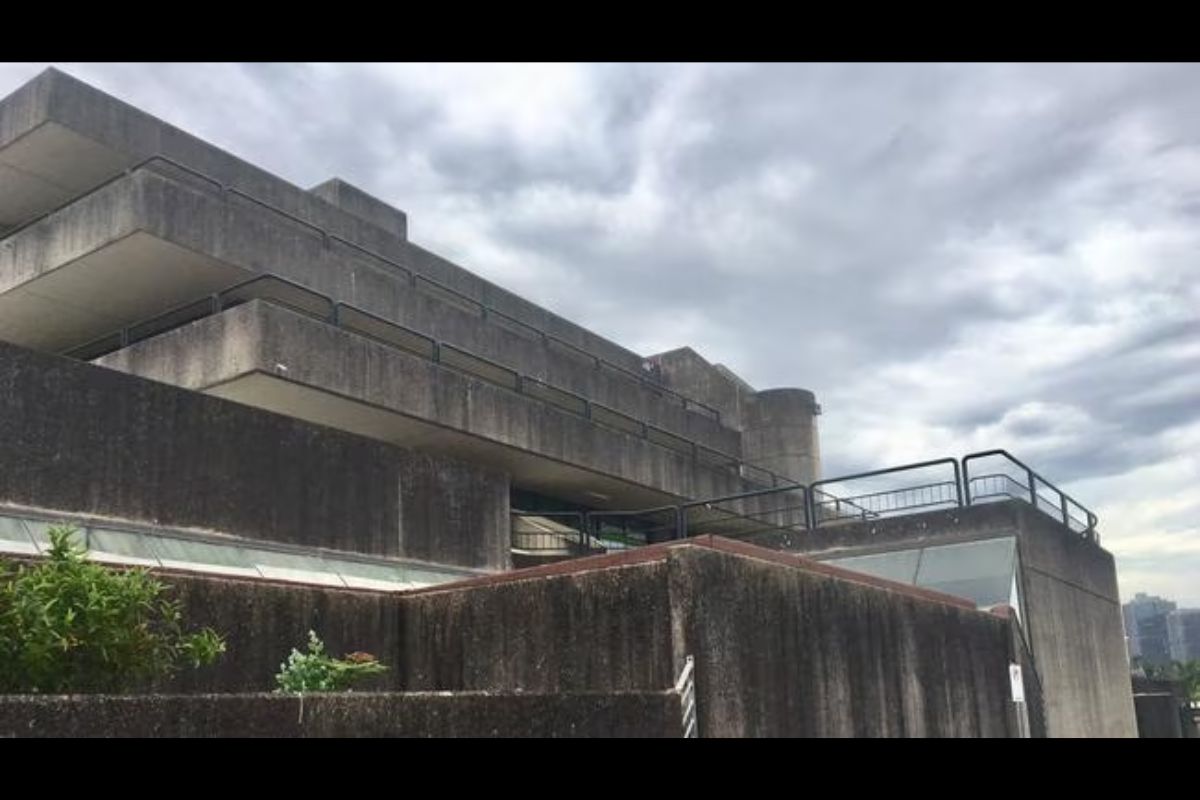
Walk through any thriving city centre — Melbourne’s Docklands, Brisbane’s South Bank, or along the Barangaroo foreshore in Sydney — and you will notice something connecting the newest towers, cultural institutions, and pedestrian laneways: raw, unapologetic concrete. Not the grey, crumbling stuff of carparks, but deliberately crafted surfaces, sculpted forms, and buildings that use the material as a design statement rather than a structural afterthought. Concrete has undergone a remarkable transformation in the architectural imagination, moving from purely utilitarian to genuinely beautiful.
This shift has not happened overnight, nor is it exclusive to Australia. But what makes it particularly compelling here is how well concrete suits our climate, our lifestyle, and our evolving aesthetic preferences. Concrete architects Sydney firms have been championing this material for decades — drawing on its thermal mass, its durability in coastal environments, and its ability to sit comfortably alongside timber, steel, and glass in the hybrid designs that define contemporary Australian architecture.
So what is driving concrete’s rise to prominence? It is a combination of technological innovation, sustainability imperatives, cost logic, and an honest aesthetic that resonates with clients who have grown weary of superficial finishes. Understanding why architects keep returning to this ancient material reveals a great deal about where design is heading — and why the best buildings of the next decade will almost certainly have concrete at their core.
A Material With Thousands of Years of Credibility
Concrete is not new. The Romans used a version of it — volcanic ash mixed with seawater and lime — to build harbour structures and the Pantheon, which has stood for nearly 2,000 years. That extraordinary longevity is no coincidence. Roman marine concrete has actually been found to grow stronger over time as seawater minerals crystallise within its structure, a finding published in the journal American Mineralogist that has architects and materials scientists rethinking how modern formulations can replicate that self-reinforcing chemistry.
Modern concrete has evolved well beyond Roman pozzolana. Today’s formulations include high-performance concrete (HPC), ultra-high-performance concrete (UHPC), self-compacting concrete, and fibre-reinforced variants that can achieve compressive strengths exceeding 150 megapascals — roughly 30 times stronger than standard residential-grade mixes. These advances mean architects can design thinner slabs, longer cantilevers, and more complex organic forms without compromising structural integrity.
Thermal Mass and the Australian Climate Advantage
One of the most underappreciated properties of concrete is its thermal mass — the ability to absorb, store, and slowly release heat. In climates with significant temperature swings between day and night, this characteristic is enormously valuable. A concrete slab or exposed wall will absorb the day’s heat and release it through the cooler evening hours, naturally moderating indoor temperatures without relying solely on mechanical heating and cooling systems.
The Your Home technical manual, published by the Australian Government, identifies high-thermal-mass materials like concrete, brick, and rammed earth as essential tools in passive design strategies for most Australian climate zones. Research by the Concrete Institute of Australia suggests that well-designed thermally massive buildings can reduce heating and cooling energy consumption by up to 25 per cent compared with lightweight construction alternatives. In a country grappling with rising energy costs and increasingly intense heatwaves, building with concrete is not simply an aesthetic choice — it is an energy strategy.
Sustainability — Challenging the Old Narrative
Concrete’s reputation on sustainability has historically been complicated. Cement production accounts for approximately eight per cent of global CO₂ emissions, making it one of the more significant contributors to industrial carbon output. That figure is not something the industry can dismiss. It is, however, changing rapidly as the sector reinvents its approach to concrete’s most carbon-intensive component.
Supplementary cementitious materials (SCMs) — fly ash, ground granulated blast-furnace slag, and silica fume — are now routinely used to replace 30 to 70 per cent of Portland cement in commercial mixes. These are industrial by-products that would otherwise go to landfill, and their use dramatically reduces the embodied carbon of a concrete structure. Geopolymer concrete, which eliminates Portland cement entirely in favour of alkali-activated industrial waste, is moving from laboratory curiosity to commercial application, with several Brisbane infrastructure projects already using geopolymer formulations in their foundations.
Beyond production, concrete offers lifecycle sustainability advantages that few materials can match. A well-designed concrete building will stand for 100 years or more. It does not rot, it does not burn, and it does not require the ongoing maintenance that timber or lightweight steel cladding demands. When those structures eventually come down, concrete can be crushed and recycled as aggregate for new mixes or road base. Longevity, factored across the full building lifecycle, is one of the most powerful sustainability metrics there is.
The Aesthetic Shift — Brutalism’s Second Life
There is a generation of architects and clients who grew up looking at the unloved concrete buildings of the 1960s and 70s — housing commissions, carparks, government offices — and concluded that the material itself was the problem. In fact, the problem was almost always the quality of the concrete, the absence of detailing, and a cultural environment that prioritised cost-cutting over craft. The material itself had nothing to do with it.
Contemporary architects have reclaimed concrete’s expressive potential. Board-formed concrete — where timber formwork leaves its grain imprinted on the finished surface — creates a warmth and texture that is almost tactile. Polished concrete floors have become a residential standard, chosen for their reflective qualities and their ability to anchor a room. Exposed concrete ceilings in commercial fitouts communicate a deliberate rawness that resonates with creative industries seeking workspaces that feel authentic rather than corporate.
Internationally, the influence of Japanese architect Tadao Ando has been transformative. Ando’s signature smooth, seamlessly formed concrete — used in the Church of the Light in Osaka and the Chichu Art Museum in Naoshima — demonstrated that concrete could be quiet, spiritual, and extraordinarily precise. His work opened a new chapter in how architects worldwide think about the material, shifting it from structural necessity into a medium for emotional experience.
Versatility That Other Materials Simply Cannot Match
Steel and timber are directional — they work best in linear forms, beams, and columns. Glass is a plane. Concrete is the one primary structural material that can be poured and cast into almost any shape imaginable. Curved walls, shell roofs, organic sculptural facades, sweeping cantilevers — none of these are achievable at meaningful scale with any other material at comparable cost.
The Sydney Opera House remains the most celebrated example of this in the Australian context. Jørn Utzon’s extraordinary shell vaults could not have been realised in any other structural material. More recently, the new Melbourne Metro Tunnel stations use exposed concrete to create cathedral-like underground spaces that feel generous and civic rather than utilitarian — a far cry from the grim underpasses that characterised earlier generations of transit infrastructure.
In residential architecture, concrete’s versatility shows up in a different register. Cantilevered bedroom volumes, curved feature walls, integrated benchtops, in-situ garden structures — skilled residential architects are using concrete not just as structure but as a continuous design language that flows from inside to outside. That continuity is something timber-framed construction can approximate with finishes, but never quite replicate with the same material honesty.
The Economics of Building to Last
Concrete is not always the cheapest building material at the point of construction. Formwork, reinforcement, and specialist labour add up. But evaluating a building material solely on its initial cost is the kind of short-term thinking that has filled Australian cities with structures needing expensive renovation or demolition within 30 years of being built. Whole-of-life costing — accounting for maintenance, energy performance, and longevity — consistently favours concrete for commercial and institutional projects.
Insurance premiums for concrete buildings are typically lower due to superior fire resistance. Maintenance costs are reduced because concrete does not require regular painting, sealing, or cladding replacement. In coastal and high-humidity environments — think Darwin, the Gold Coast, or coastal New South Wales — concrete’s resistance to moisture, salt air, and termites gives it a decisive durability advantage over lightweight alternatives that demand constant upkeep.
Where the Industry Is Heading
The next frontier for concrete in architecture is both digital and sustainable. 3D-printed concrete, already being trialled in residential and infrastructure projects across Europe and North America, allows complex geometric forms to be produced without traditional formwork — reducing material waste dramatically. Researchers at RMIT University and the University of Melbourne are actively developing printable concrete mixes suited to Australian construction conditions, and several pilot homes have already been completed using robotic extrusion technology.
Carbon-capture concrete is another emerging development worth watching. Startups including California-based CarbonCure have developed technology that permanently injects captured CO₂ into fresh concrete during mixing, where it mineralises and becomes part of the structure. The process simultaneously sequesters carbon and marginally increases compressive strength — a rare situation where the environmental and structural outcomes align perfectly.
Self-healing concrete, embedded with bacteria that produce limestone when activated by water infiltrating cracks, is transitioning from academic research to real-world application in civil infrastructure. The implications for maintenance costs and structural longevity are significant, particularly for the kind of large-scale infrastructure investment that Australian state governments are currently committing to.
The Bottom Line
Concrete’s growing prominence in modern architecture is not a trend driven by nostalgia or novelty. It is the product of a material that genuinely suits the demands of contemporary practice — climatically, aesthetically, structurally, and increasingly, environmentally. The architects choosing concrete today are doing so with a sophistication and intentionality that the builders of the 1960s never had access to.
The material’s story is still being written. With advances in low-carbon formulations, digital fabrication, and bio-inspired self-repair, the concrete buildings of the next generation will be stronger, lighter, more expressive, and more sustainable than anything that has come before. For architects serious about building things that last, that is a compelling proposition by any measure.